TL;DR
The July 28, 2026, Committee of the Whole meeting focused on balancing community beautification initiatives with municipal resources, as well as advancing the redevelopment of a long-vacant building at 126 South Mallory Avenue. Significant debate centered on standardizing the maintenance of downtown planter beds and evaluating historical zoning restrictions on residential subdivision signs. Ultimately, the committee resolved to budget for a professional landscaping consultant, opted to handle subdivision sign requests through individual planned development amendments, and approved zoning variances to finally bring a new cabinetry business to the abandoned Mallory Avenue site.
Matters from the Public
This segment allowed community members to address items not explicitly on the agenda, focusing primarily on environmental maintenance and volunteerism.
- A resident addressed the committee regarding unauthorized dumping and the spread of invasive teasel plants near a regional stormwater detention facility.
- Acting in a personal capacity, the resident installed an unauthorized temporary garden to deter trash dumping and protect the city’s marsh investments.
- Citing a professional background as a heliogeophysicist, the resident requested permission to formally collaborate with the city’s engineering contractors to monitor hydrology and native plant growth.
- The Director of Public Works confirmed that the engineering division oversees the site and offered to coordinate directly with the resident.
Consent Agenda: 126 South Mallory Avenue Variances
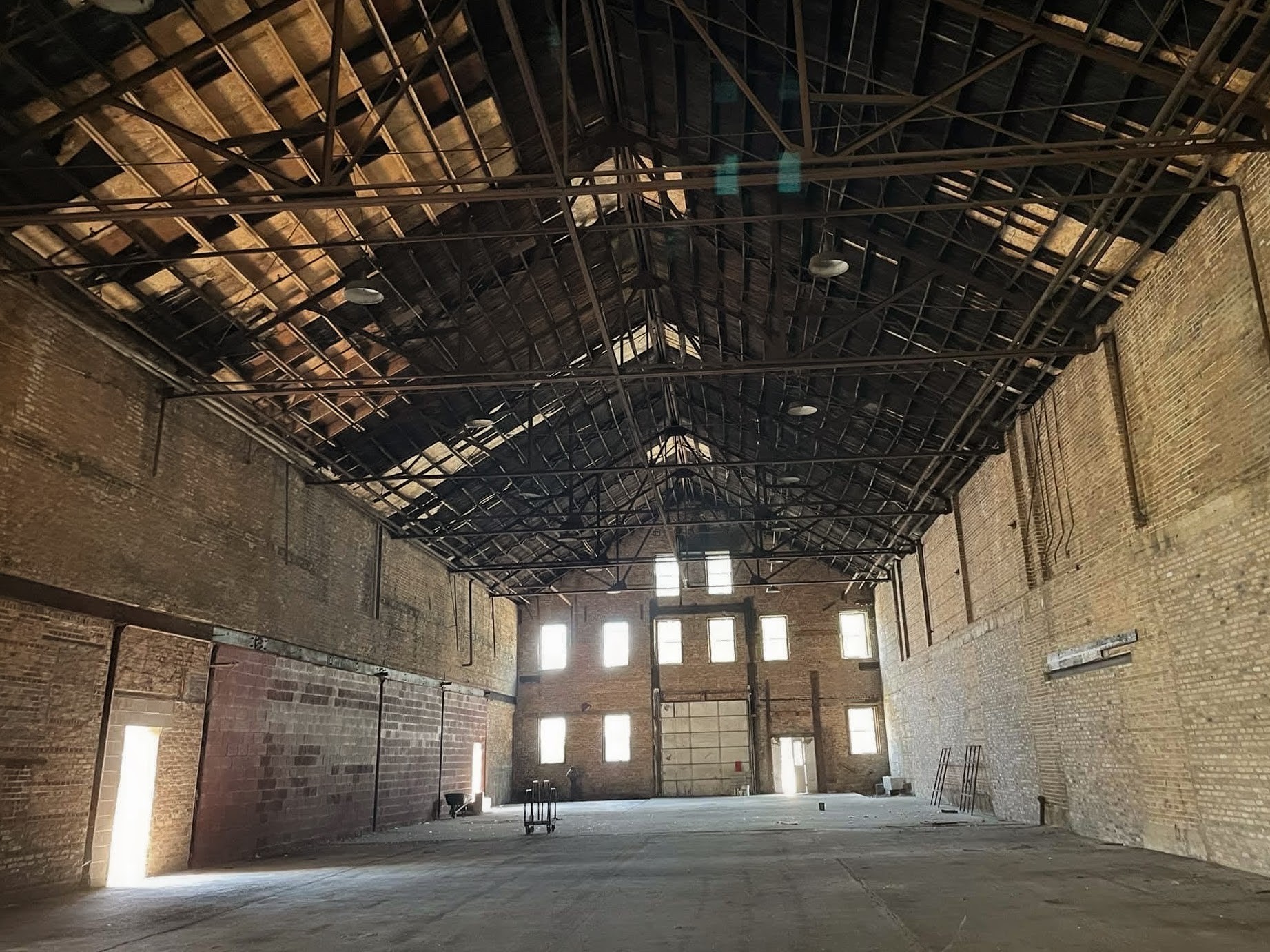
An alderperson pulled this item from the consent agenda to request specific details about the rehabilitation plans for a property that requires extensive work due to its complex history and long-vacant status.
- The property was subdivided twice in the 1980s and 1990s to reconfigure the lotting and sits adjacent to a building that previously burned down.
- The site was primarily used for storage from the mid-1990s until around 2016 or 2017, sitting largely idle for nearly 30 years before being purchased by the current applicants around 2020 or 2021.
- The applicants plan to adapt and reuse the space by opening their own cabinetry business inside the vacant brick building.
- To accomplish this, the owners will completely rehabilitate the gutted interior, connect the building to city utilities, and clean up the exterior area to install 22 new parking spaces.
- The property owners requested zoning variances to accommodate the new parking lot and to gain relief for landscape setback encroachments in a neighborhood commercial district.
- A strict condition of the project’s approval requires the property owner to remediate and remove an old underground environmental tank.
- The committee unanimously passed a motion to recommend approval of the variances at the subsequent city council meeting.
Non-Profit Community Presentation
The founder of the Modern Domestic Woman, along with its non-profit arm MDW Cares, delivered an informational presentation to outline services available to women navigating difficult life transitions, such as divorce, postpartum stress, and mental health challenges.
- The organization facilitates free community support groups and educational workshops featuring local legal, financial, and therapeutic experts.
- The group links residents to a vetted list of local mental health providers who currently operate without waitlists.
- Current community outreach initiatives include a period poverty drive and an agriculture-based mentorship program for teenage girls.
- Community members can connect with the organization and access resources via their website at mdwcares.com, or by finding them on Instagram and Facebook.
1120 Essex Court Accessory Structure Variances
The committee reviewed zoning variances for a residential accessory structure (a treehouse) that was initiated without a permit, leading to a stop-work order while the city clarified its classification.
- The applicants required variances of approximately 5.5 feet for the interior side yard setback and 3.34 feet for the rear yard setback.
- The Building Commissioner found no imminent structural concerns during a preliminary review, noting that un-occupied accessory structures do not require footings extending below the frost line.
- The committee unanimously approved the variance requests.
- City staff committed to updating the municipal website and drafting zoning code clarifications to prevent future resident confusion regarding permits for play equipment.
Electrical Infrastructure Contracts
To bolster the reliability of the city’s electrical grid, the committee reviewed and approved two contracts focused on burying overhead utility lines and maintaining distribution substations.
- A resolution passed approving a contract for 15 kV underground circuit improvements in a heavily wooded neighborhood, funded in part by a $1.17 million federal grid resilience grant.
- Staff explained that material costs for the undergrounding project came in approximately 30% over estimates due to extended supply chain lead times and the grant’s strict “Buy America” manufacturing requirements.
- A second resolution passed approving a $63,085 contract to perform preventative maintenance and diagnostic testing at the Paramount substation, a procedure required every five years.
Downtown Planter Bed Status
The committee held an extensive policy discussion regarding the aesthetic quality, plant selection, and maintenance burdens of downtown planter beds, responding to public complaints that the areas looked weedy and unkempt. The debate aimed to evaluate the historical shift toward using native plants and to formalize a volunteer maintenance program that originally started as an ad hoc community effort.
- The city’s downtown beautification efforts historically feature a mix of landscaping, including hanging baskets and large round planters filled with annuals that are completely replaced every year, alongside ground beds that were shifted toward a native planting policy to reduce long-term maintenance.
- The current volunteer program began informally before current staff tenure when a community member stepped up to organize volunteers to care for neglected planter beds, but the program has lacked formal city direction or a set maintenance schedule.
- Currently, there are exactly 20 designated volunteer beds, where community members recently installed 729 native plants for under $3,500, saving the city significant labor costs.
- Staff highlighted current maintenance strategies, noting they water the hanging baskets every single day and use water trucks on Mondays, Wednesdays, and Fridays for the planters while continuing to replace obsolete irrigation parts.
- A local business owner and a representative from the Environmental Commission cited a lack of cohesive design, urging the city to implement professional oversight rather than relying solely on the ad hoc volunteer structure.
- Certain beds, specifically on Houston Street and River Street, face significant physical damage from festival foot traffic and dogs, prompting discussions about adding decorative fencing.
- Staff emphasized that public works personnel prioritize critical infrastructure and storm mitigation over botanical maintenance, lacking the resources to weed downtown beds and tree grates daily.
- The committee debated the possibility of outsourcing the maintenance of downtown beds to a private vendor, noting that neighboring municipalities (such as Roselle, Oak Park, Park Forest, Buffalo Grove, and Lincolnshire) successfully use this model.
- While acknowledging an outsourced contract would increase costs, alderpersons pointed out it would provide clear accountability (a “single throat to choke”) and relieve city staff.
- The committee explored potential administrative solutions, including adding wayfinding placards or a GIS map to publicly identify volunteer groups to encourage stewardship and accountability, as well as the possibility of forming a formal beautification committee.
- The committee ultimately reached a consensus to budget for a professional landscaping consultant in the upcoming year to design a formalized planting map to guide the volunteers, with the option to fully outsource maintenance to a vendor in the future if the volunteer model proves unsustainable.
Residential Subdivision Signs
Prompted by a sign request from the Ritter Farm subdivision, the committee debated the merits of a 2008 comprehensive plan policy that heavily restricted single-family subdivision signs to minimize visual clutter and avoid a sense of neighborhood exclusivity.
- Staff strongly cautioned against rewriting the city-wide zoning ordinance to allow the signs, warning that loosening regulations could invite constitutional legal challenges regarding content neutrality.
- Several alderpersons argued against the 2008 “exclusivity” rationale, arguing that subdivision signs offer valuable geographic wayfinding and that residents willing to privately fund and maintain them should not be prohibited.
- An alderperson pointed out that the city is nearly fully developed (with perhaps fewer than 200 empty acres remaining), making a broad, time-consuming zoning debate over new subdivision signs largely a moot point.
- The committee noted that any future subdivision signs must be tied to a Special Service Area (SSA) or formal maintenance agreement on common property to prevent them from falling into disrepair if a homeowner’s association dissolves.
- To avoid altering city-wide zoning codes, the committee directed staff to process the Ritter Farm subdivision’s sign request as a minor amendment to their existing Planned Development agreement, allowing the city to maintain its overall sign prohibition while reviewing individual requests on a case-by-case basis.
City Project Updates
The City Administrator and staff provided routine status updates on intergovernmental negotiations, infrastructure repairs, and construction timelines happening throughout the municipality.
- Negotiations with a neighboring municipality regarding access through a residential boundary gate have stalled due to a mayoral administration change, forcing the city to restart community outreach.
- The ongoing 2026 street paving program has prioritized school zones to ensure completion before the academic year begins in August.
- Construction on a new downtown river plaza is delayed due to supply chain shortages impacting the delivery of light posts and benches.
- A major railway company successfully completed repairs to eliminate hazardous drop-offs on sidewalk ramps near local train crossings.
Agenda: https://bataviail.community.highbond.com/Portal/MeetingInformation.aspx?Id=271
Author: Jim Fahrenbach
Leave a Reply