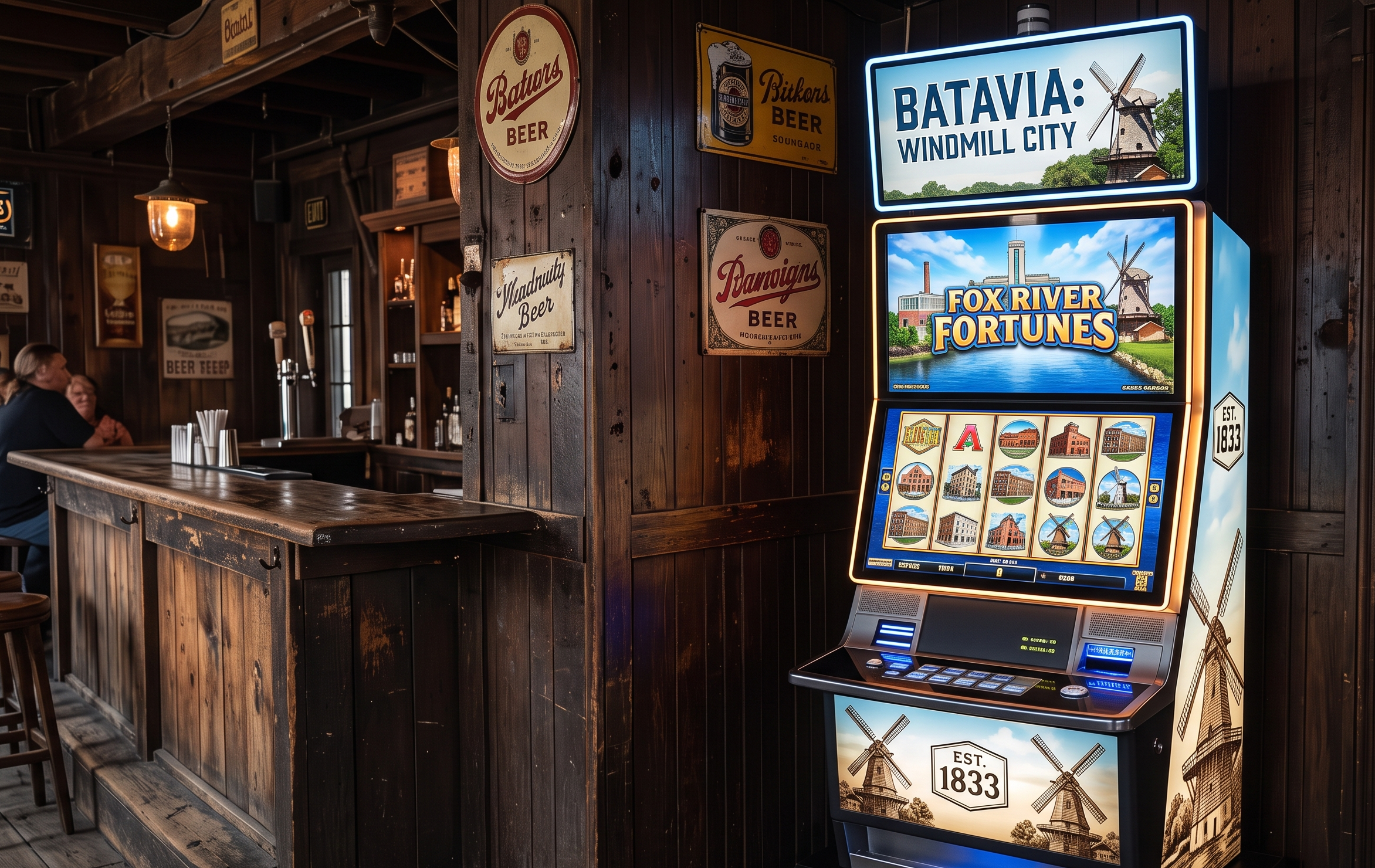
The landscape of video gaming in Batavia may soon see its most significant regulatory shift in years. Following a directive from the Committee of the Whole (COW) earlier this spring, city staff has drafted Ordinance 2026-031, which aims to rewrite Title 3, Chapter 26 of the City Code.
This legislative push stems from discussions in May 2026, when the Plan Commission formally requested that the City Council review gaming regulations to prevent an over-proliferation of gambling establishments in the downtown area. The COW voted 9 to 3 to have staff investigate local changes independently of any single business application.
Here is a comprehensive look at what is currently on the books, what is being proposed, and the potential impact on our community.
The Current Gaming Landscape in Batavia
To understand the proposed changes, it helps to look at where things stand today. Batavia currently has 13 active video gaming license holders spread across four distinct zoning districts:
- Downtown Mixed Use (DMU) District: 8 existing licenses (Rosati’s Pizza, Gammon Coach House, Bulldog’s Cellar, JT’s Tavern, East China Inn, Riverside Pub and Pizza, Wilson Street Tavern). There is also 1 pending application for a new downtown location.
- Public Facilities and Institutional (PFI) District: 2 licenses (Moose Lodge, Batavia Overseas/VFW).
- General Commercial (GC) District: 2 licenses (Crosstown Pub, Funway).
- Community Commercial (CC) District: 1 license (Speedway Truck Stop).
Currently, several of these locations are bound by a Conditional Use requirement within the Zoning Code, meaning they had to go through an individualized zoning approval process to operate gaming machines. Furthermore, local buffer zones mirror basic state standards, which mandate that gaming must be 100 feet away from schools and churches. However, the state measures this distance strictly from building to building, a practice city staff described as historically loose and questionable.
What Ordinance 2026-031 Changes
The draft ordinance introduces four core structural modifications to Batavia’s municipal code:
1. Hard Numerical Caps
Instead of letting the market dictate the number of establishments via zoning hearings, the city is looking to set a firm ceiling.
- Citywide Cap: A maximum of 14 licenses total will be permitted across Batavia.
- Downtown Cap: A maximum of 9 licenses will be permitted specifically within the DMU (Downtown Mixed Use) District. (Note: Setting the downtown cap at 9 accounts for the 8 existing licenses plus the 1 currently pending application.)
2. Stricter Property Line Setbacks
The city wants to move away from the state’s loose “building-to-building” measurement. The new ordinance proposes that all newly licensed locations must be located at least 100 feet from the property line of land owned by a school or religious institution, or must not abut the property entirely.
3. The “Clean Hands” Mandate
Under the new draft, the city will explicitly prohibit issuing or renewing a video gaming license to any property owner with open City Code violations (such as building or zoning infractions) or any outstanding payments owed to the City.
4. Direct Revocation Powers
The draft text grants the Mayor, serving as the local Liquor Commissioner, clear authority to revoke a gaming license if an establishment accumulates more than three violations of underage gaming, underage drinking, or a combination of both within a designated 3-to-5-year window.
5. Streamlining the Zoning Code
If these hard licensing caps are adopted, city staff actually recommends removing the conditional use requirement from the Zoning Code entirely. Because the caps create a hard limit, the prolonged public zoning process would no longer be necessary to control proliferation.
How the Current and Proposed Ordinances Compare
| Regulatory Feature | Current Framework | Proposed Ordinance 2026-031 |
| Total License Limits | No fixed numerical cap; regulated case-by-case. | Strict cap of 14 citywide. |
| Downtown Limits | No local cap; currently 8 active, 1 pending. | Strict cap of 9 in the DMU District. |
| Setback Measurements | 100 feet from building to building (State Standard). | 100 feet from property line to property line, or a ban on abutting parcels. |
| Approval Process | Requires a case-by-case Conditional Use zoning process for many sites. | Eliminates conditional use; regulated directly by available cap space. |
| Code Enforcement Links | No explicit rule blocking renewals for minor property violations. | Licenses frozen/denied if there are open building, zoning, or financial debts to the city. |
The Pros and Cons of the New Ordinance
Like any significant policy shift, Ordinance 2026-031 brings a distinct set of trade-offs for Batavia’s business climate and community character.
The Pros:
- Immediate Local Control: The City Council can directly manage the footprint of gaming without getting bogged down in lengthy, bureaucratic zoning variations. It allows leaders to decide exactly if and where expansion makes sense.
- Preserving Downtown Character: By capping the DMU district at 9, the city prevents downtown from becoming oversaturated with gaming-centric businesses, keeping the focus on diverse dining and retail.
- Leverage for Property Maintenance: Tying license renewals to a clean zoning and building record gives the city a powerful tool to ensure commercial landlords maintain their properties and pay local fees on time.
- Clear Penalties for Violations: Giving the Liquor Commissioner a clear mechanism to revoke licenses for repeat underage violations adds a strong layer of public safety accountability.
The Cons:
- Diminished Local Revenue: Capping the number of operations limits future economic expansion in this sector. A reduction in future gaming opportunities directly translates to less potential gaming tax revenue for the city budget.
- Unintended “Grandfathering” Traps: Stricter property line setbacks could accidentally penalize historic downtown businesses if they ever change hands. For example, staff noted that under the new setback rules, the Gammon Coach House site would likely become non-conforming. If they ever surrendered their license, gaming could never be reestablished at that location. Similarly, if “school property” definitions are interpreted to include private daycares, JT’s Tavern would be heavily impacted due to its proximity to Mill Creek Daycare.
- Commercial Multi-Tenant Disadvantages: Downtown Batavia has unique real estate footprints; one single property in the DMU currently houses three separate licensed establishments. While staff is not recommending a cap on licenses per multi-tenant building, future tweaks to these location rules could unfairly lock out new businesses trying to move into shared commercial structures.
Next Steps for Council
Existing establishments can breathe a sigh of relief for the immediate future: city staff presumes that all current operations will be grandfathered in until their licenses are naturally terminated or surrendered.
Moving forward, the Committee of the Whole may choose to host a formal review session with current license holders to gather feedback. If the committee reaches a solid consensus on the draft language, Ordinance 2026-031 will head to the full City Council for final approval and adoption later this August.
Ordinance: https://bataviail.community.highbond.com/document/6601cb58-2899-4d87-a865-7742c9d6d845/
Author: Jim Fahrenbach
Leave a Reply