TL;DR
Originating from a 1909 school merger, the Batavia Bulldogs survived early hardships—including a Great Depression-era shutdown—to become a deeply rooted community institution known for its century-old rivalry with Geneva. Over the decades, the program’s home evolved from the historic Memorial Field to today’s state-of-the-art Bulldog Stadium, which acts as a major economic driver for the city.
The modern powerhouse was built by two legendary head coaches: Mike Gaspari (1985–2010), who established a winning culture with 18 playoff appearances, and Dennis Piron (2011–Present), who cemented a dynasty with IHSA State Championships in 2013 and 2017. As the program ascended, yielding massive statewide brand recognition for Batavia, local BATV coverage evolved alongside it, transitioning from public access cable to modern, student-driven digital streaming.
In the annals of Illinois high school football, few programs possess the historical depth, fierce community integration, and modern-day dominance of the Batavia High School Bulldogs. Across over a century of existence, the program has weathered foundational shifts, eras of existential adversity, and monumental coaching transformations to emerge as a perennial state powerhouse.
This is the story of an institution that grew from a fragile early-20th-century merger into a modern gridiron juggernaut.
Forging a Foundation: The Early Years and Adversity
The roots of Batavia’s athletic legacy trace back to a critical consolidation in 1909, when East Batavia and West Batavia high schools officially united their athletic programs. Just four years later, in 1913, Batavia played its first official football game against neighboring Geneva High School, sparking a rivalry that would become a cornerstone of Fox Valley culture.
Interestingly, the program was not always known as the Bulldogs. From roughly 1932 to 1938, the Batavia football team competed under the moniker of the “Vikings”. However, the Great Depression brought severe economic realities to the area. In a period historically characterized as a financial “retrenchment,” Batavia was forced into the heartbreaking decision to drop its football program entirely from 1934 to 1936.
When the program eventually stabilized and resumed play, it shed the Vikings nickname, which was subsequently adopted by its archrival, Geneva, in 1942. By 1945, Batavia officially rebranded as the Bulldogs—the iconic identity that continues to define the community today.
(Note on Alumni: In strict adherence to the focus on institutional and coaching legacy, it must be noted countless local athletes have worn the Batavia uniform and may be covered in a future article.)
The Grounds: From Memorial Field to Bulldog Stadium
To understand the evolution of the program, one must look at the turf upon which its history was written. Batavia’s first true permanent home for football was established in 1921 when the Board of Education purchased nine acres of land at Illinois Avenue and Jackson Street. Developed for $15,000, “Batavia Field” hosted the team from 1924 until 1946. In July 1946, following the conclusion of World War II, the grounds were proudly rededicated as Memorial Athletic Field in honor of the city’s returning veterans. (That site was later acquired by the Batavia Park District in 1976 and remains Memorial Park today.)
As the town expanded, a new Batavia High School was constructed on the far west side of the city in 1966. By September 1968, a brand-new athletic field opened on the campus. This facility would eventually be christened Bulldog Stadium, growing into one of the premier Friday night venues in the western suburbs.
Bulldog Stadium has undergone significant modernizations to match the program’s championship pedigree. In 2016, the natural grass was replaced with a state-of-the-art artificial turf surface, allowing for year-round community and athletic use regardless of harsh Illinois weather. In 2025, the stadium received another major upgrade with the installation of a massive digital video scoreboard. Far beyond a simple cosmetic enhancement, this scoreboard was intentionally designed to integrate with the school’s media production classes, allowing students to run live graphics, instant replays, and sponsor animations. Today, the stadium not only hosts varsity clashes but also serves as the proving ground for Batavia’s 7th- and 8th-grade tackle football teams, deeply embedding the high school experience into the youth pipeline.
A Century-Old Feud: The Geneva Rivalry and Conference Evolution
No history of Batavia football is complete without addressing its century-old feud with the Geneva Vikings. Dating back to that initial meeting in 1913, the annual clash has evolved into one of the top-20 oldest football rivalries in the state of Illinois.
With well over 100 games played, the series is renowned for its remarkable historical parity, frequent nail-biting finishes, and an atmosphere that commands the undivided attention of both towns. Referred to locally as the “Biggest Game of the Season,” it is the truest embodiment of hometown pride.
As the local population boomed and the high school expanded, Batavia’s competitive footprint shifted accordingly. Moving on from its foundational years in the Little Seven Conference, the Bulldogs eventually transitioned to the Upstate Eight Conference, before ultimately finding a home in the modern, heavyweight DuKane Conference—a league perfectly suited to the program’s elevated stature.
The Mike Gaspari Era: Building the Modern Powerhouse (1985–2010)
The modern era of Batavia football—and its transformation from a competitive local team to a statewide force—began with the arrival of head coach Mike Gaspari in 1985. Taking over a program seeking a consistent, winning identity, Gaspari meticulously laid the bricks of a perennial contender.
Over a remarkable 26-season tenure, Gaspari led the Bulldogs to 18 playoff appearances. His visionary approach included establishing a robust youth pipeline; in 2003, Gaspari and future successor Dennis Piron founded Batavia Youth Football (BYF), ensuring the high school would be fed by well-trained, system-ready athletes for decades to come.
The pinnacle of Gaspari’s legendary career arrived in 2006, when he guided Batavia to the IHSA Class 6A State Championship game at the University of Illinois’ Memorial Stadium, finishing as the state runner-up. Gaspari’s tenure proved that a state title was a realistic ambition for the Bulldogs, setting the stage for the program’s explosive next chapter.
The Dennis Piron Era: A Championship Dynasty (2011–Present)
When Mike Gaspari stepped down following the 2010 season, the transition of power was seamless. Dennis Piron, a BHS Class of 1983 alumnus and a long-time assistant under Gaspari, assumed the role of head coach in 2011. Under Piron’s leadership, Batavia did not just maintain its success; it shattered the ceiling.
Piron’s tenure ushered in a definitive championship era. He achieved 100 career wins in just 117 games—the absolute fastest march to the century mark in the program’s history.
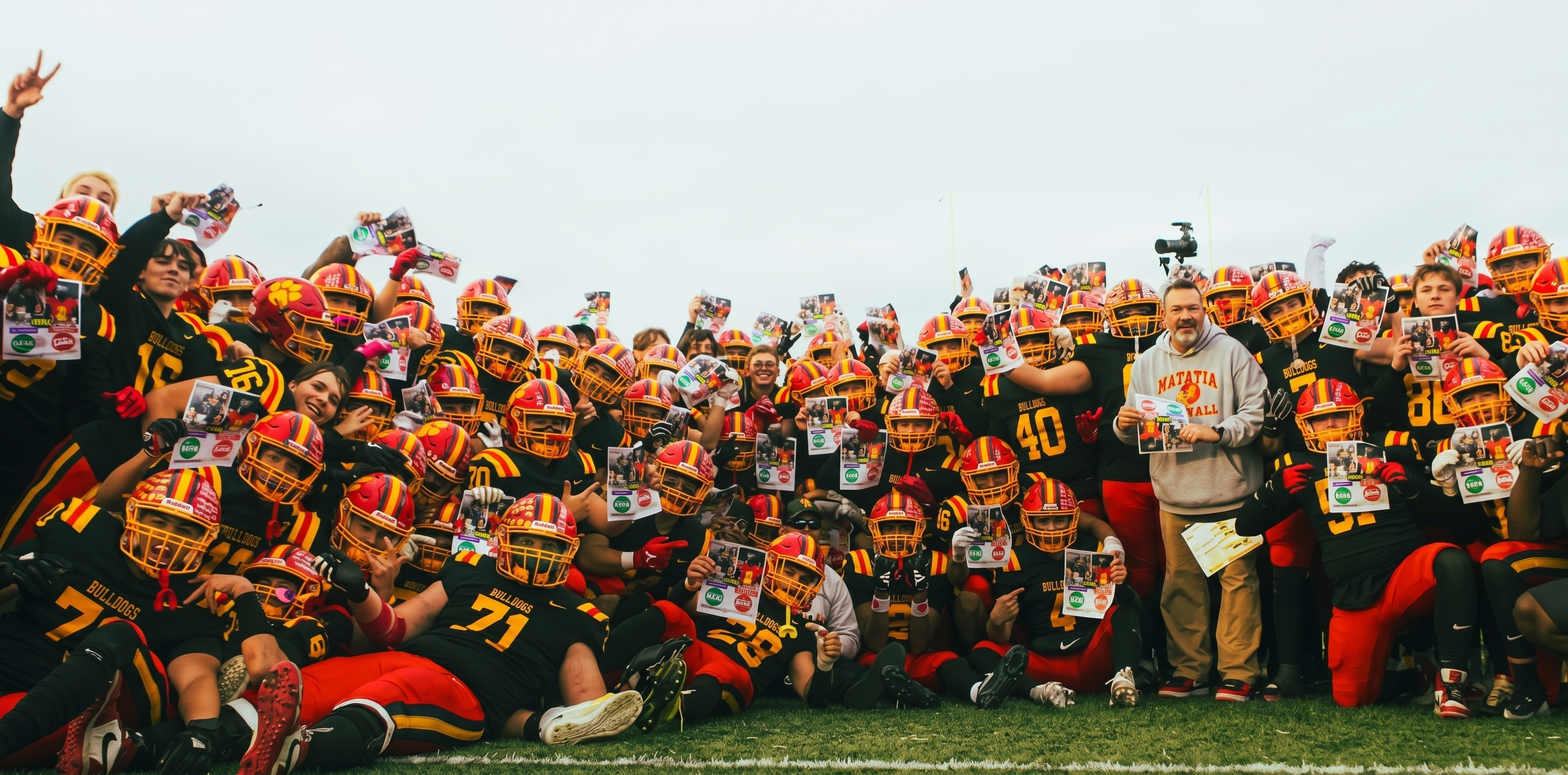
Characterized by high-tempo offenses and suffocating defenses, Piron’s teams quickly reached the summit. In 2013, Batavia captured its first-ever state title, defeating Richards 34–14 to win the Class 6A State Championship. Four years later, moving up in classification, Piron led the Bulldogs to the 2017 Class 7A State Championship at NIU’s Huskie Stadium, edging out Lake Zurich 20–14 in a dramatic overtime victory.
The Bulldogs’ status as a contemporary powerhouse is cemented by their sustained deep playoff runs, including highly competitive Class 7A State Runner-up finishes in both 2022 and 2024 against Mount Carmel. Today, Piron stands firmly as one of the most respected and statistically dominant active coaches in Illinois high school football.
The Civic Impact: Friday Nights and Statewide Recognition
The success of the Batavia High School football program resonates far beyond the hash marks of Bulldog Stadium; it acts as an economic and civic engine for the city itself. Operating under the community rallying cry, “For Your Team, For Your Town”, the program is a vital unifier for the residents of Batavia.
On autumn Friday nights, home games routinely draw massive crowds exceeding 5,000 spectators. This influx transforms the city’s economic rhythm. Local businesses—from downtown restaurants to neighborhood taprooms—actively build promotions around game nights, capturing the heavy foot traffic of fans gathering before the short walk to the stadium. A robust network of community sponsorships further integrates local commerce into the athletic experience, ensuring that the Friday night spotlight directly benefits Batavia’s local economy.
Beyond the city limits, the Bulldogs serve as a premier branding asset for Batavia. In the landscape of Illinois sports, consistent deep playoff runs and state championships have cemented the town as a household name. This statewide recognition signals to the broader region that Batavia is a municipality anchored by high standards, robust youth development, and fierce civic pride—elevating the city’s reputation well past the borders of Kane County.
Broadcasting the Bulldogs: The Evolution of BATV
As Batavia’s on-field product ascended to elite status, the community’s demand for coverage sparked a media evolution. For decades, Batavia Access Television (BATV) served as the vital, traditional lifeline for fans, broadcasting games on public access Channel 17 and Channel 10.
However, as the program entered its championship era, BATV rapidly adapted to the digital age. The coverage transitioned from standard cable broadcasts to a multi-platform media operation. Today, fans can stream live games via the modern BATV+ app and live YouTube broadcasts.
Furthermore, the integration of Bulldog Media has allowed the high school to utilize Hudl streaming platforms to provide live, student-produced broadcasts. Buoyed by recent stadium upgrades like the 2025 video scoreboard, this initiative not only ensures fans never miss a snap—whether they are in town or across the country—but it also provides invaluable broadcast journalism experience for BHS students, offering a unique, localized “student perspective” on every play.
The Batavia High School football program is more than a roster of athletes; it’s a vital community institution. From the 1909 unification of two rival schools to the agonizing years without football in the 1930s, the program’s early survival paved the way for modern greatness. Driven by the foundational genius of Mike Gaspari, elevated to dynastic heights by Dennis Piron, and playing under the Friday night lights of Bulldog Stadium, the Bulldogs stand today as a shining example of what happens when a town, a school, and a coaching staff align in the pursuit of perfection.
Author: Jim Fahrenbach
Leave a Reply