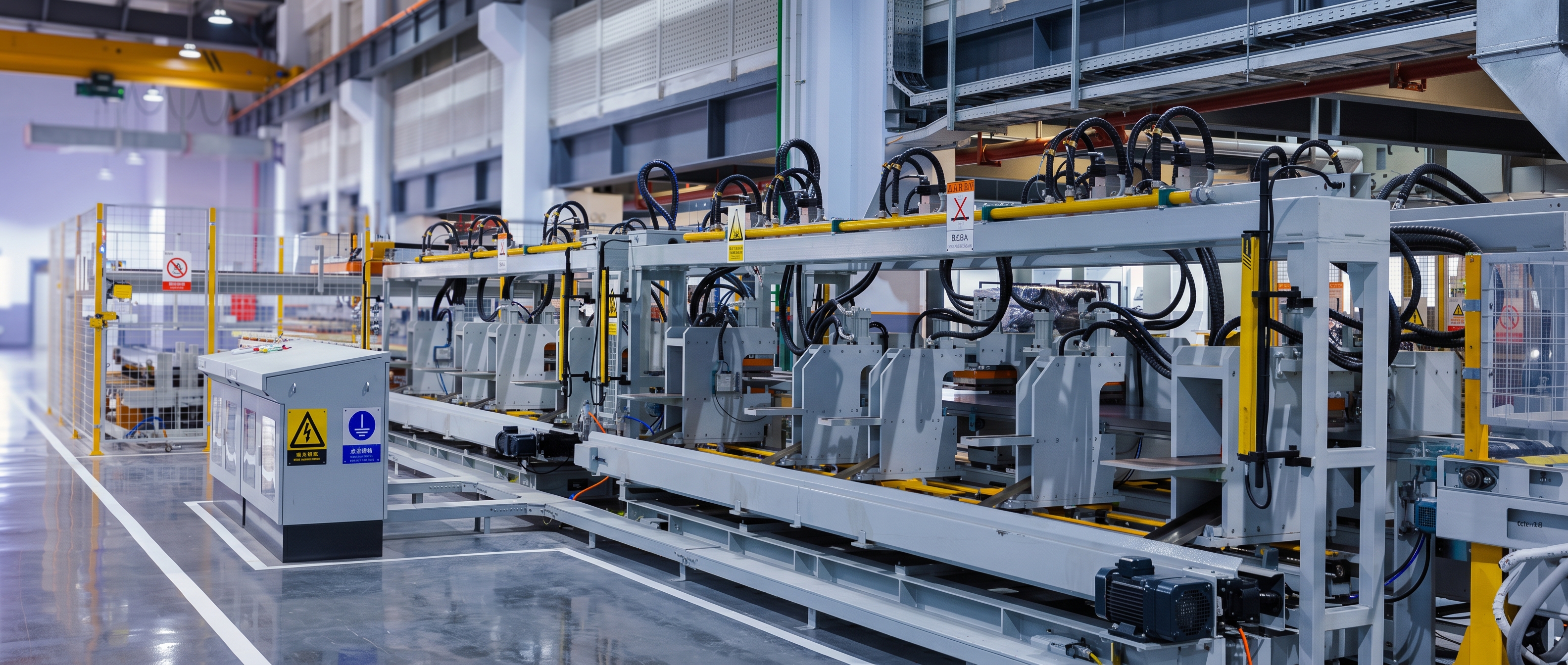
TL;DR
Batavia’s manufacturing sector is a huge and unexpected part of its tax base, outpacing other sectors and driving regional employment through high-tech industrial growth, infrastructure investments, and a legacy tied to Fermilab.
Residents, even long term ones, are generally surprised when they find out the impact of manufacturing in Batavia and how it’s a heavy-hitting economic engine for the region. While many suburban municipalities rely on retail corridors and sprawling commercial centers to generate tax revenue, Batavia has intentionally and historically cultivated a distinctly different economic profile: it’s a town that makes things.
A review of municipal equalized assessed valuation (EAV) data reveals a striking anomaly for a Chicago collar-county suburb. Local property valuations indicate an industrial footprint that completely eclipses traditional commercial retail:
- Industrial Property Value: ~$239.2 million
- Commercial Property Value: ~$147.4 million
With industrial property values sitting approximately 62% higher than commercial values, Batavia’s tax base is heavily anchored by its sprawling business parks and fabrication facilities. This outsized industrial concentration provides a highly stable economic foundation that is far more resilient to the e-commerce disruptions currently battering municipal retail sectors.
A History of Heavy Industry
Batavia’s current industrial landscape is not a recent phenomenon; it is the latest iteration of a sector forged in the mid-19th century. The city’s geographic and logistical advantages established an early gravity for heavy industry that separated it from neighboring agricultural communities.
- Hydro-Power and River Transport: The catalyst for Batavia’s early industrialization was the Fox River. The construction of early dams provided highly reliable mechanical water power, immediately attracting heavy milling and factory operations to the downtown riverbanks. In the pioneer era, the river also served as a crucial logistical corridor. Before reliable overland roads or rail existed, heavy materials, timber, and localized agricultural freight could be moved downstream along the Fox River using flat-bottomed boats and current-driven transit. However, as industrialization grew and more mill dams were constructed to power shoreline factories, commercial long-distance river navigation became severely restricted, forcing the region to look toward overland shipping.
- “Rock City” and the Limestone Boom: Before it was producing advanced tech components, Batavia was quite literally foundational to the region. Early in its history, the town earned the nickname “Rock City” due to the massive limestone quarries clustered directly along its riverbanks. Commercial quarrying accelerated in 1842, and by 1860, the city boasted at least ten active extraction sites. This heavy industry supplied the raw materials that built early local infrastructure—including bridges in neighboring towns and early buildings at Northern Illinois University—and played a crucial role in supplying the stone required to rebuild Chicago after the Great Fire of 1871.
- The Windmill Capital of the World: By the late 1800s, Batavia pivoted to complex durable goods, earning global recognition as the “Windmill Capital of the World.” Massive industrial operations like the U.S. Wind Engine and Pump Company, the Challenge Company, and Appleton Manufacturing produced tens of thousands of water-pumping windmills. This era embedded a culture of precision engineering, foundry work, and large-scale assembly into the local workforce.
- Strategic Rail Logistics: Because river navigation was ultimately blocked by the very dams that powered the factories, Batavia required a better way to export its massive output of heavy stone and agricultural equipment. The city aggressively secured early and robust freight rail connections. The arrival of the Chicago, Burlington and Quincy Railroad—whose historic 1854 depot still stands today as a museum—and the Chicago & North Western lines gave the city a massive logistical advantage for shipping manufactured goods across the country.
This historical infrastructure—reliable power, heavy raw materials, precision assembly, and robust freight logistics—laid the groundwork for the manufacturing ecosystem that defines the city today.
By the Numbers: A Decade of Manufacturing Job Growth
To understand the strength of Batavia’s industrial economy, you need to look at how the local workforce has performed over the last ten years compared to broader macroeconomic trends. Over the past decade, traditional manufacturing across the state of Illinois has faced persistent headwinds; statewide sector employment has experienced long-term contraction, recently hovering around 571,400 jobs after hitting a 25-year low.
However, a recent review confirms that manufacturing remains the single largest employment sector within the city limits, directly supporting 3,382 jobs. When examining the workforce trajectory over the past decade, several key metrics and regional comparisons stand out:
- Sector Dominance: Manufacturing employment completely outpaces every other local industry, significantly beating out the city’s next largest sectors—Professional, Scientific, and Technical Services (roughly 3,000 workers) and Wholesale Trade (just over 1,800 workers).
- A Regional Labor Magnet: While the city hosts nearly 3,400 manufacturing jobs, demographic and commuter flow data reveals that the vast majority of these industrial positions are filled by non-residents. Batavia acts as a massive net importer of industrial labor, drawing a daily workforce from across the Fox Valley and greater Kane County. This dynamic cements the city’s role not just as a residential community, but as a critical employment anchor for the wider regional economy. Private-sector employment in Batavia grew by 33.9 percent between 2015 and 2025, roughly eight times the rate of growth in both the county (3.9 percent) and the region (4.1 percent).
- Statewide Defiance: While the state shedded thousands of basic assembly jobs over the last ten years, Batavia absorbed high-value employment by pivoting toward advanced, specialized production. The jobs replacing legacy manufacturing are increasingly technical, highly skilled, and better compensated.
- Regional Contrast: While Geneva leans heavily into boutique retail, hospitality, and healthcare, Batavia absorbs a disproportionate share of the region’s heavy manufacturing and distribution workforce. St. Charles boasts a balanced commercial base, but Batavia’s ratio of manufacturing jobs per capita is significantly denser. Furthermore, while Aurora has larger raw workforce numbers due to its massive population, Batavia punches far above its weight class, maintaining an industrial density that rivals large urban corridors.
Recent Developments
The local industrial landscape is not just growing; it’s evolving. Modern manufacturing spaces in the city are increasingly sleek, automated, and tightly integrated with the technology sector.
A prime example of this convergence is the recent relocation of QT9 Software. A developer of advanced Quality Management Systems (QMS) and Enterprise Resource Planning (ERP) tools used exclusively by regulated manufacturers, QT9 is establishing its $12 million global headquarters in an adaptive-reuse project in historic downtown Batavia at 190 S. Water St. Expected to bring dozens of high-skilled tech jobs to the city center by 2027, this move bridges the gap between the factory floor and the software suite, putting tech developers in the same community as the very manufacturing floors they serve.
This tech-forward momentum complements an already formidable roster of major manufacturing employers operating within the city limits. Key pillars of the local manufacturing economy include, and are not limited to:
- AGCO Corporation: Operates a major facility for the distribution and assembly of advanced agricultural equipment and replacement parts.
- AGS Technology: A custom injection molding manufacturer specializing in the innovative use of recycled thermoplastics for the automotive, industrial, and consumer markets.
- ALDI: Its North American headquarters in Batavia serves as a massive corporate and distribution hub that partners closely with regional food manufacturers to supply its vast grocery network.
- Amcor: Operating a significant facility in Batavia, this global leader produces specialty packaging and custom labeling for the food, healthcare, and consumer goods sectors.
- Cast Aluminum Solutions: A manufacturer specializing in designing and producing highly-engineered aluminum products and components for industries like aerospace, semiconductor, oil & gas, medical, and food and beverage.
- DS Containers: A state-of-the-art manufacturer operating a massive facility in Batavia that produces innovative two-piece polymer-coated steel aerosol cans.
- EDM Intelligent Solutions (EDMIS): Specializes in precision electrical discharge machining (EDM), micro-machining, and advanced CNC manufacturing services.
- Fermilab (Fermi Research Alliance): While primarily a national physics laboratory, it is one of Batavia’s largest employers and operates massive on-site industrial fabrication and superconducting manufacturing capabilities.
- Flinn Scientific: Headquartered in Batavia, this is a premier manufacturer and distributor of highly specialized science supplies and safety equipment.
- Hentzen Coatings: A leading manufacturer of innovative, sustainable powder and liquid coatings for industrial, defense, and aerospace applications.
- Prince Industries: A globally recognized manufacturer of precision-machined and sheet-metal-fabricated components.
- Suncast Corporation: A massive consumer products manufacturer specializing in resin-based outdoor storage and organization, anchored by a sprawling headquarters and manufacturing footprint on Kirk Road. They just announced a major expansion.
- Tour Edge Golf: Headquartered in Batavia, this manufacturer designs, engineers, and assembles highly advanced, cutting-edge golf clubs and accessories.
Legacy and Remediation: The Siemens Site and Building “Residuals”
While Batavia is expanding its modern industrial footprint on the city’s east side, it has also had to manage the environmental legacy of its 20th-century manufacturing boom. A prime example is the former Furnas Electric and Siemens factory site on the west side, located at McKee Street and Van Nortwick Avenue.
After the facility closed in 2006 and the sprawling factory was demolished in 2009, the 18-acre site sat unused, entangled in years of friction between the city and the corporation over unremoved foundations and environmental hazards. Soil testing revealed that foundry sands used as fill during the factory’s mid-century expansion contained high levels of hydrocarbons, preventing any safe redevelopment.
Following pressure from the city, a massive environmental remediation effort culminated in 2017 to excavate and replace the contaminated soil. Because the site sits directly adjacent to H.C. Storm Elementary School and is surrounded by residential neighborhoods, the city strategically stripped the land of its industrial zoning. Today, rather than hosting another factory, the fully remediated site is home to a major residential redevelopment bringing in over 160 new single-family and townhomes to the area.
Additionally, it’s not uncommon to have older buildings in town which have buried tanks or environmental issues from when they served an industrial purpose or the seemingly out of place quonset hut downtown (https://en.wikipedia.org/wiki/Quonset_hut). These ongoing issues are well known by the city and regularly addressed as they’re uncovered.
The Fermilab Effect
It’s impossible to analyze Batavia’s manufacturing footprint without acknowledging the profound gravitational pull of Fermi National Accelerator Laboratory. For decades, Fermilab has acted as an incubator for specialized industrial talent.
Fermilab actively fosters formal partnerships with the private sector through several dedicated departments and collaborative programs. The Office of Partnerships and Technology Transfer (OPTT) manages direct industry engagements, offering technology licensing, Strategic Partnership Projects (SPPs) for facility access, and Cooperative Research and Development Agreements (CRADAs) for joint research.
The laboratory’s deep need for cutting-edge particle physics infrastructure—ranging from advanced cryogenics to superconducting magnets—has historically required a robust local supply chain. Specialized fabrication shops and precision engineering firms, such as Prince Industries, originally planted their roots in the Fox Valley to meet the exacting, micrometer-level tolerances required by Fermilab’s scientific experiments.
Over the years, this dynamic has cross-pollinated the local workforce. The presence of world-class scientists and engineers has continuously pushed local manufacturers to elevate their own capabilities, creating an ecosystem where highly complex, low-tolerance manufacturing thrives.
The Future of Batavia Manufacturing
Looking ahead, the outlook for Batavia’s industrial sector is defined by the shift toward advanced, tech-enabled manufacturing and the critical infrastructure required to support it.
Robotics and Intelligent Automation
The broader regional economy is aggressively leaning into intelligent automation, and Batavia’s factory floors are on the front lines of this modernization. The deployment of industrial robotics, AI-enabled supply chain analytics, and autonomous material handling is transforming how local facilities operate. This shift will drastically increase output per square foot, allowing local manufacturers to scale production and increase their economic yield without necessarily requiring massive physical footprint expansions. Although it won’t necessarily result in more jobs, it will help keep manufacturers in Batavia competitive in the global market.
Powering the Next Generation
As robotics and advanced machining become the industry standard, power consumption is skyrocketing. The city is aggressively working to balance this industrial growth with the demands placed on the electrical grid. Recent civic analyses highlight massive proactive infrastructure investments, including an $18 million upfront off-site electrical improvement at the Northeast Substation. While initially spurred by high-performance computing and enterprise colocation developments like the Hut 8 Corp data center, these massive substation upgrades create a ripple effect, ensuring that the local grid has the sheer capacity to support the next generation of energy-intensive, automated manufacturing facilities.
Workforce and Adaptation
The future of Batavia’s manufacturing also hinges on workforce development. The traditional “blue-collar” factory job has been replaced by the “new-collar” technician—workers who can code, troubleshoot robotics, and manage complex ERP software systems. Because the city relies heavily on a commuting workforce to fill these roles, maintaining strong regional transit and transportation infrastructure will be vital to keeping talent flowing into the city’s industrial parks. By attracting software firms that serve the industrial sector, upgrading heavy power infrastructure, and embracing robotics, the city is positioning itself not just as a place where things are made, but where the future of manufacturing is actively being engineered.
Author: Jim Fahrenbach
Leave a Reply