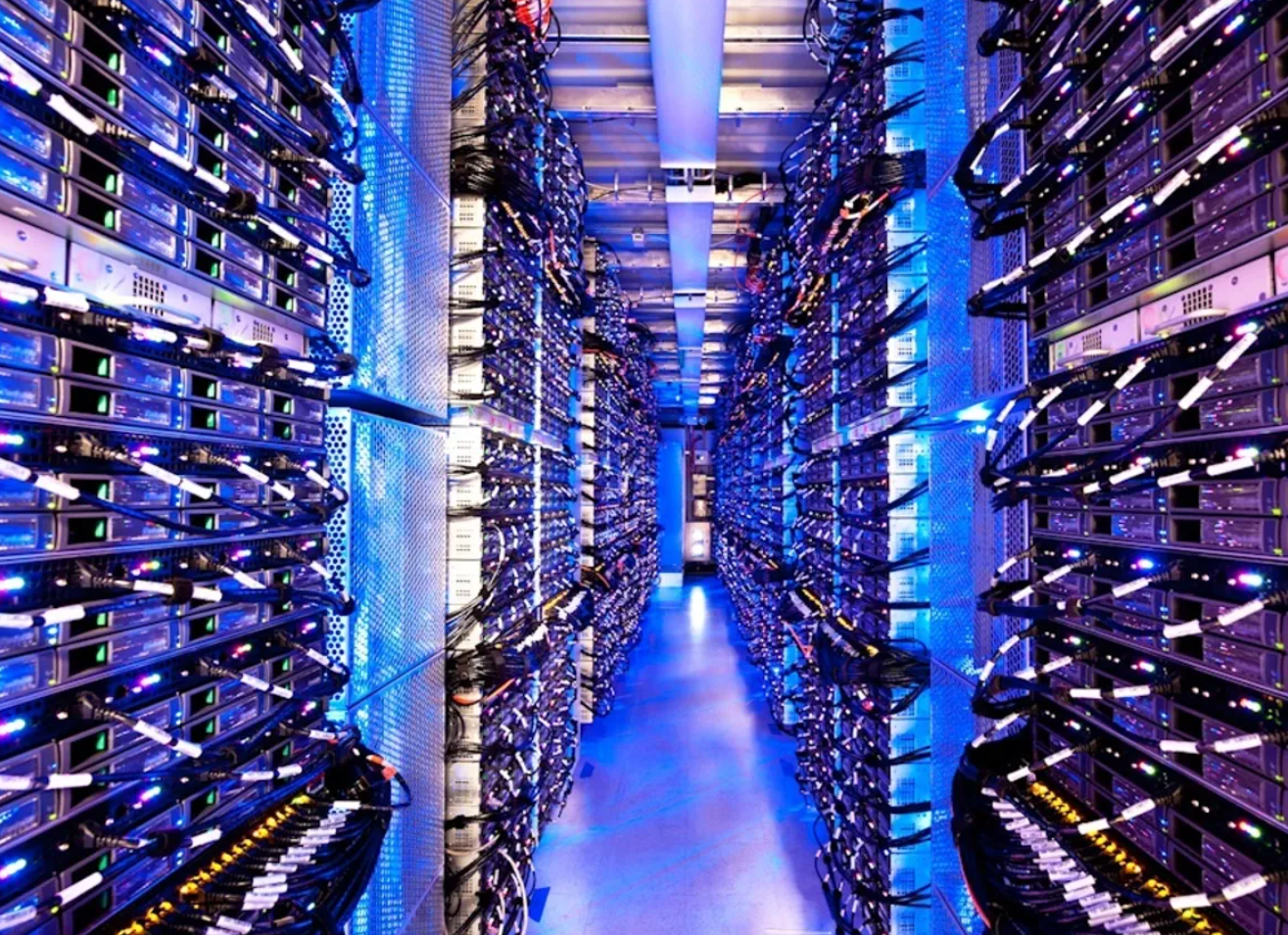
Below is a summary of the approved Batavia data center. Unlike nearby hyperscale projects, this is a compact 120,000-square-foot facility with strictly capped power (up to 50 MW) and water (1,000 gal/day) usage. By utilizing a vacant lot in our industrial area, the project maximizes tax revenue with minimal resource impact.
Notably, the city agreement includes a formal ban on cryptocurrency mining, which is also cost-prohibitive due to Batavia’s market-based electricity pricing. This covers the major dimensions of the project; for more updates, please visit:https://www.bataviail.gov/o/cob/page/batavia-data-center-project-hut-8
1. Location and Site Benefits
- Address: 1780 Hubbard Ave (Northeast Industrial Park).
- Infrastructure Synergy: The site is directly adjacent to the Northeast Substation (1900 Hubbard Ave). This proximity minimizes energy transmission loss and allows for direct fiber-optic “on-ramps.”
- Zoning & Infill: The property is zoned General Industrial. Using this vacant lot as an “infill” project allows the city to grow its tax base without rezoning residential land or encroaching on greenfield space.
- Isolation: Location is not near any homes, existing or planned, and east of Kirk road and south of Aldi headquarters.
2. Ownership and Strategy
- Owner: Batavia DC Corp., a subsidiary of Hut 8 Corp. (Nasdaq: HUT).
- Strategic Shift: While Hut 8 has a history in Bitcoin mining, the Batavia facility is governed by a strict prohibition on blockchain computation. It is specifically designed for Enterprise Colocation and High-Performance Computing (HPC) workloads.
3. Power Sourcing and Capacity
- Market-Based Sourcing: The facility will purchase electricity on the open market and does not generate power onsite. It does not draw from the city’s standard Power Sales Agreement (PSA), ensuring that residential rates are shielded from market fluctuations.
- Energy Glide Path:
- Initial Usage: 20 MW (Operational goal: Late 2026 / Early 2027).
- Final Capacity: Scalable to 50 MW by approximately 2031.
- Grid Protection: The city is requesting a 50 MW increase to its current ComEd capacity cap to maintain “headroom” for the rest of the community.
- Backup generators are onsite and will only be used in the event of a power outage.
4. Water Usage Approach
The project utilizes a Closed-Loop Cooling System, which is significantly more sustainable than traditional “evaporative” cooling towers.
- Daily Consumption: Capped at 1,000 gallons per day (on average) for minor maintenance and staff needs. This is similiar to the usage of four residential homes.
- Initial Charge: Requires a one-time load of ~450,000 gallons of ionized water (200,000 gallons less than an Olympic sized pool). The agreement specifies this water be trucked in or sourced separately to avoid sudden strain on the city’s aquifer.
- Recycling: The water is recirculated indefinitely and only needs to be discharged to the local sewer and replaced approximately every 2,000 days (5.5 years).
5. Economic Benefits to Batavia
The project is projected to generate between $23 million and $85 million in net revenue for the city over a 20-year period, depending on energy usage tiers.
| Revenue Source | At 20 MW (Initial) | At 50 MW (Full Build-out) |
| Annual Utility Revenue | ~$2.3 Million | ~$5.7 Million |
| Franchise Fees (General Fund) | $375,000 | $800,000 |
| Property Tax Estimates | Significant (New revenue for schools/parks) | Significant (New revenue for schools/parks) |
| Infrastructure Investment | $18 Million (Upfront by developer) | N/A |
Note: The $18 million in off-site electrical improvements (substation upgrades, new transformers) is paid for upfront by Hut 8. The city will reimburse this cost over 7 years using only the revenue generated by the project itself.
6. Expected Noise Levels
- Regulatory Compliance: The facility must adhere to the Batavia Noise Ordinance, which limits noise at the property line to approximately 55–60 dBA (comparable to a normal conversation).
- Mitigation Advantages: Because the site uses a closed-loop system (radiator-style cooling) rather than massive open-air evaporative fans, the constant “hum” associated with typical data centers is significantly reduced.
- Acoustic Design: The current plan includes sound-dampening louvers and potential perimeter sound walls around backup generators to ensure no disruption to the neighboring industrial or residential areas.
7. Project Timeline
| Phase | Milestone | Date / Status |
| Approval | Electric Master Services Agreement (MSA) approved by City Council (12-1 vote). | July 2025 |
| Legal | Amended MSA approved, codifying the 1,000-gal water cap and the blockchain ban. | September 2025 |
| Permitting | Design Review & Building Permits: Finalizing engineering plans for the facility and site. | Late 2025 – Early 2026 |
| Infrastructure | Substation Upgrades: Construction begins on the $18M electrical improvements at the Northeast Substation. | Spring 2026 (Expected) |
| Operational | Phase 1 Launch: Facility goes “live” with an initial energy load of 20 MW. | Winter 2026 / Early 2027 |
| Full Build-out | Phase 2 Completion: Reaching the maximum approved capacity of 50 MW. | ~2031 |
Key Restriction: Blockchain Ban
A critical component of the September 2025 Master Services Agreement is the explicit prohibition of blockchain and cryptocurrency mining. The facility is restricted to traditional enterprise servers.
Data Center Comparison: Land, Power, and Water Usage
| Data Center Location | Land Use | Building Size and Count | Initial Power (MW) | Final Power (MW) | Daily Water Usage | Type of Facility | Proposed Workloads |
|---|---|---|---|---|---|---|---|
| Batavia (Hut 8) | 7.2 Acres | ~120k sq ft (1 Bldg) | 20 MW | 50 MW | < 1,000 Gal | Colocation | Enterprise & HPC (Blockchain Prohibited) |
| Project Cardinal (Yorkville) | ~1,000+ Acres | ~17M sq ft (14 Bldgs) | ~200 MW | 1,800 MW | ~42,500 Gal | Hyperscale Campus | AI, Cloud, & Large-Scale Data |
| Project Steel (Yorkville) | 540 Acres | ~9M sq ft (18-24 Bldgs) | ~100 MW | ~900 MW | ~45,000 Gal | Hyperscale Campus | General Cloud & Enterprise |
| CyrusOne (Aurora) | ~70 Acres | ~1M sq ft (3 Bldgs) | 58 MW | 184 MW | ~3,200 Gal | Colocation / Enterprise | Financial Services & Cloud |
| Microsoft (Hoffman Estates) | 200 Acres | ~400k sq ft (2 Bldgs) | 100 MW | 200 MW | ~23,000 Gal | Hyperscale | Azure AI & Enterprise Cloud |
| Meta (DeKalb) | 505 Acres | ~2.4M sq ft (5 Bldgs) | ~80 MW | 172+ MW | ~200,000 Gal | Hyperscale | Social Media & AI Research |
Author: Jim Fahrenbach


Leave a Reply