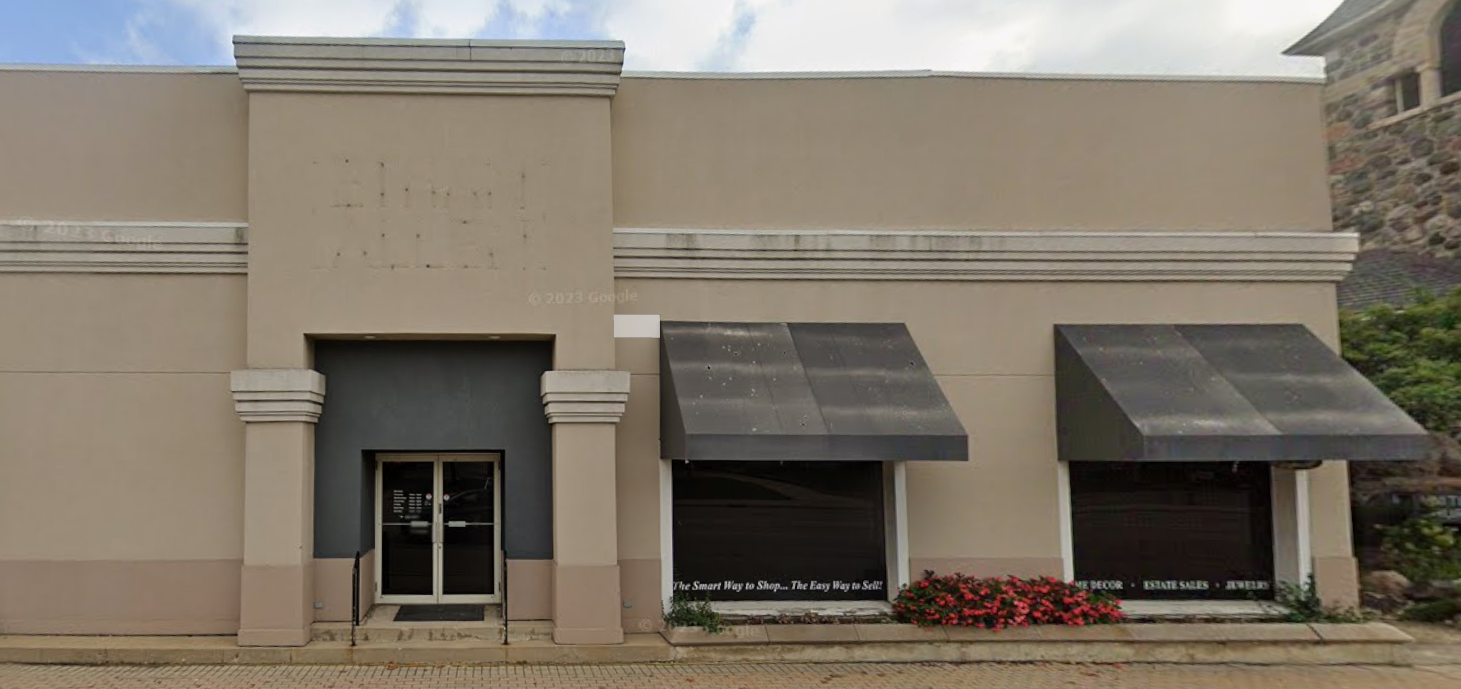
The proposed demolition of 14-18 North Batavia Avenue is the latest example of a recurring challenge in our downtown renewal: how to handle older, non-contributing properties, with condition issues, that have sat vacant for years?
The owner, Batavia United Methodist Church, has applied to tear down the building and create a green space, with a possibility for future development.
The property has not had a commercial tenant since 2019 and this proposal will be on the agenda in the Historical Commission meeting October 13th at 7 PM. Summary below:
Demolition Proposal
Batavia United Methodist Church (BUMC) has submitted a Certificate of Appropriateness (COA) application to demolish the commercial structure at 14-18 N. Batavia Ave., commonly known as the Hubbard building. The applicant, represented by Robert Walter, proposes to restore the site to a grass surface after demolition, with no other immediate improvements planned.
The church purchased the property in 2015 with the long-term goal of demolishing the existing structure to make space for a future church expansion. The applicant argues for demolition based on several points:
- Poor Condition: The building is described as a “hodgepodge” of six different buildings constructed between 1880 and 1972 with varying quality, multiple elevations, structural deficiencies, outdated systems, and a history of moisture infiltration
- Fire Hazard: The Batavia Fire Department has reportedly identified the building as having a high risk for a catastrophic fire, which poses a threat to the adjacent historic church building.
- Lack of Viability: A 2013 feasibility study concluded the building was not a viable space for the church’s needed. The property also has limited parking, making it unappealing for commercial use
- Community Benefit: The demolition would eliminate the fire risk, safeguard the historic church, restore the north view of the church from Route 31, and increase civic beauty by creating a green space.
Property History and Significance
The structure at 14-18 N. Batavia Avenue has a complex history.
- Origins: The property’s first structure was a one-story, wood-framed church, possibly built as early as 1842 for a Congregational church. This building served several congregations, including Holy Cross Catholic Church, before worship services ended there in 1897
- Additions and Alterations: In 1897, a two-story addition was built, and the property was converted into a furniture store.. The original church building was likely destroyed by a fire in 1915, leaving the 1897 addition as the oldest remaining portion. Over its 100-year history, multiple other additions were made, including moving a former gymnasium that had hosted the 1912 state champion Batavia High School basketball team to the rear of the store.
- Hubbard’s Furnishings: The Hubbard family owned the property from 1910 until 2013, operating it as Hubbard’s Home Furnishings. It later housed other furniture stores, including Ethan Allen and Acosta’s Consignment.
- Current Status: The building has been commercially vacant since 2019. It has been used for storage by charitable groups and for training exercises by the Batavia Fire Department. Due to significant alterations to its exterior over the years, including being covered with Dryvit, the building is classified as a “Non-Contributing” structure within the Historic District. Preservation Partners of the Fox Valley notes that while its architecture may not contribute, its history with the Hubbard family might meet criteria for local landmark status.
City Staff Analysis and Concerns
City staff reviewed the application and expressed concerns about the proposal.
- Conflict with Downtown Plan: The demolition would result in the loss of viable commercial property and the creation of another vacant lot in the downtown area, which does not align with the goals of the City’s Downtown Plan.
- Lack of Maintenance: Staff believes that some of the building’s deterioration could have been prevented with routine maintenance. They note that the property owner has not maintained it for commercial use since 2019, with the intent to eventually demolish it for a long-term, but not immediate, expansion.
Staff Recommendations for Approval Conditions
Should the Historic Preservation Commission (HPC) recommend approval to the City Council, city staff suggests that six conditions be included to mitigate the impact of the demolition:
- Installation of a 4-foot open-faced picket or ornamental metal fence along North Batavia Avenue, set back 5 feet for landscaping.
- Submission and approval of a landscape plan featuring salt- and drought-tolerant shrubs, grasses, and perennials.
- Removal of the driveway access from North Batavia Avenue.
- A bond to cover the cost of any sidewalk damage caused during demolition.
- Restoration of the building’s footprint to grass with a physical barrier to prevent vehicles from parking on it.
- Installation of additional safety barriers along the northern property line if deemed necessary.
https://bataviail.community.highbond.com/document/7e2b064f-80f1-4423-962f-8b9686a9d4f2
https://www.ppfv.org/blog/2025/10/9/hubbards-home-furnishings-a-brief-history
Author: Jim Fahrenbach


Leave a Reply