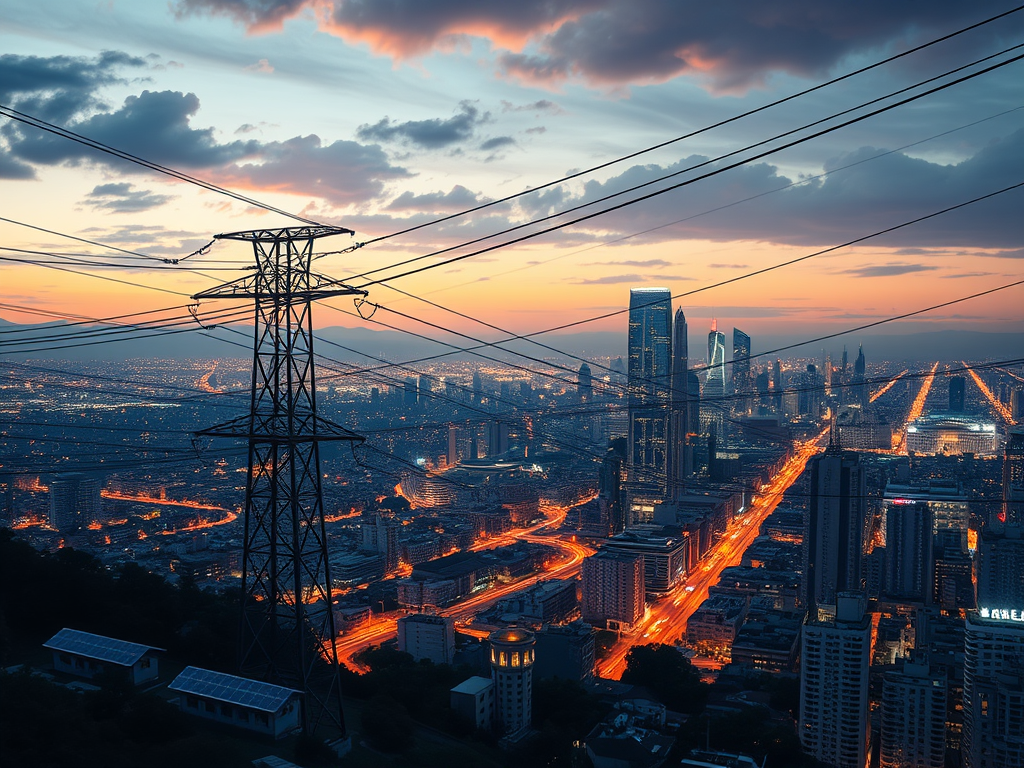
Recent City Hall discussions on electrical power can seem abstract, but a new video does a better job than most to clarify the national supply ‘crunch’ we’re facing. This high demand is straining infrastructure and, ironically, has Batavia currently ‘making money’ on the Prairie State agreement—a stark change from even five years ago. The video features the Brattle Group (our city’s consultants) and PJM (our grid operator), and helps explain why modernizing the grid without interrupting 24/7 service is so difficult.
To contextualize our local situation: the proposed Batavia data center, small by comparison, is a standard co-location facility, not the massive AI or crypto energy hogs driving the national shortage.
Misconceptions About Renewable Energy Costs
- Rising Bills vs. Lower Costs: While electricity bills in the U.S. began spiking in 2021, the cost of building renewable energy has actually dropped significantly. Since 2010, solar panel costs have fallen 90%, and wind costs have dropped over 60%. In many regions, building new grid-scale solar is cheaper than natural gas, even without tax credits.
- Political Blame Game: Politicians and attack ads often blame clean energy for rising costs, but a peer-reviewed report from the Lawrence Berkeley National Lab found no significant correlation between higher prices and the deployment of utility-scale wind and solar. In fact, states with the largest increases in renewable energy often experienced price decreases.
- Reliability Myths: Critics argue that because wind and solar are inconsistent, they require expensive backup from “peaker plants” (inefficient gas plants), canceling out savings. However, experts state that grid operators have improved at balancing these resources, often using battery storage instead of fossil fuels.
- Case Study (Texas): Despite having the highest capacity for wind, solar, and batteries, Texas electricity prices have risen less than in states with very little renewable capacity, such as Alabama and West Virginia.
The Real Drivers of Rising Costs: Infrastructure
- Generation vs. Transmission: The primary driver of rate increases is not the cost of generating power, but rather the spending on transmission and distribution. Spending on generation has actually decreased over the last five years.
- Aging Grid: The U.S. grid is aging, with much of it built in the mid-20th century. Utilities are spending over $10 billion annually to replace aging transmission infrastructure.
- Supply Chain Costs: The cost of grid equipment, such as cables and transformers, has risen far faster than the rate of inflation.
- Bureaucratic Delays: The supply of energy is not growing fast enough to meet demand due to a backlog of projects waiting for approval from grid operators like PJM Interconnection. The wait time for interconnection has skyrocketed to approximately eight years, driving up costs for consumers.
Surging Demand and Climate Factors
- Demand Spike: After a decade of flat demand, U.S. power usage is expected to double this decade due to a manufacturing boom, the adoption of electric vehicles, and the electrification of heating and industry.
- Climate Change Impact: Extreme temperatures are increasing the use of heating and air conditioning, while severe storms are forcing utilities to spend significantly more on weatherproofing and repairs. For example, residential prices in Texas rose nearly 30% in four years, partly to pay for grid repairs following winter storms.
The Impact of AI and Data Centers
- Massive Consumption: Data centers currently consume vast amounts of power, and usage could triple by 2028 due to the rise of AI. The International Energy Agency estimates data centers will drive over 20% of electricity demand growth by 2030.
- Cost Shifting to Consumers: There is concern that utilities are spreading the cost of new infrastructure needed for data centers across all ratepayers rather than charging the tech companies directly. While companies like Amazon claim to pay for their specific infrastructure, confidentiality clauses prevent public verification.
- Inflated Estimates: Some experts believe future demand estimates are overhyped because tech companies “shop around,” submitting multiple proposals for a single project. This leads to “double counting,” creating a risk of overbuilding infrastructure that ratepayers will eventually have to pay for.
Fossil Fuels and Regulation
- Keeping Old Plants Open: To meet the anticipated demand from AI, the Department of Energy has begun ordering older, uneconomic fossil-fuel plants to delay retirement. Keeping these inefficient plants online could cost ratepayers up to $5.9 billion.
- Natural Gas Exports: As the U.S. increases natural gas exports, the domestic supply decreases, likely pushing up prices for American electricity generation.
The Utility Business Model
- Incentives for Waste: Most Americans are served by Investor-Owned Utilities (IOUs), which are regional monopolies. These companies profit by earning a return on investment (usually around 10%) on new infrastructure projects.
- Profit vs. Efficiency: This model incentivizes utilities to build expensive new projects rather than pursuing cost-effective solutions like grid-enhancing technologies.
- Higher Prices: Prices at IOUs are generally higher and have risen faster than those at publicly owned utilities. Meanwhile, approximately one-third of U.S. households have had to cut back on necessities to pay energy bills in 2024.
Author: Jim Fahrenbach
Leave a Reply